5 min read
•
09 Oct 2026
1121 vs 1509 Basmati Rice: Which Should Importers Choose?
1121 and 1509 are India’s two most traded basmati varieties. Compare their cooking result, price and market fit to pick the right one for your customers.
MohiniSagar Export Desk
Verified Agricultural & Milling Contributor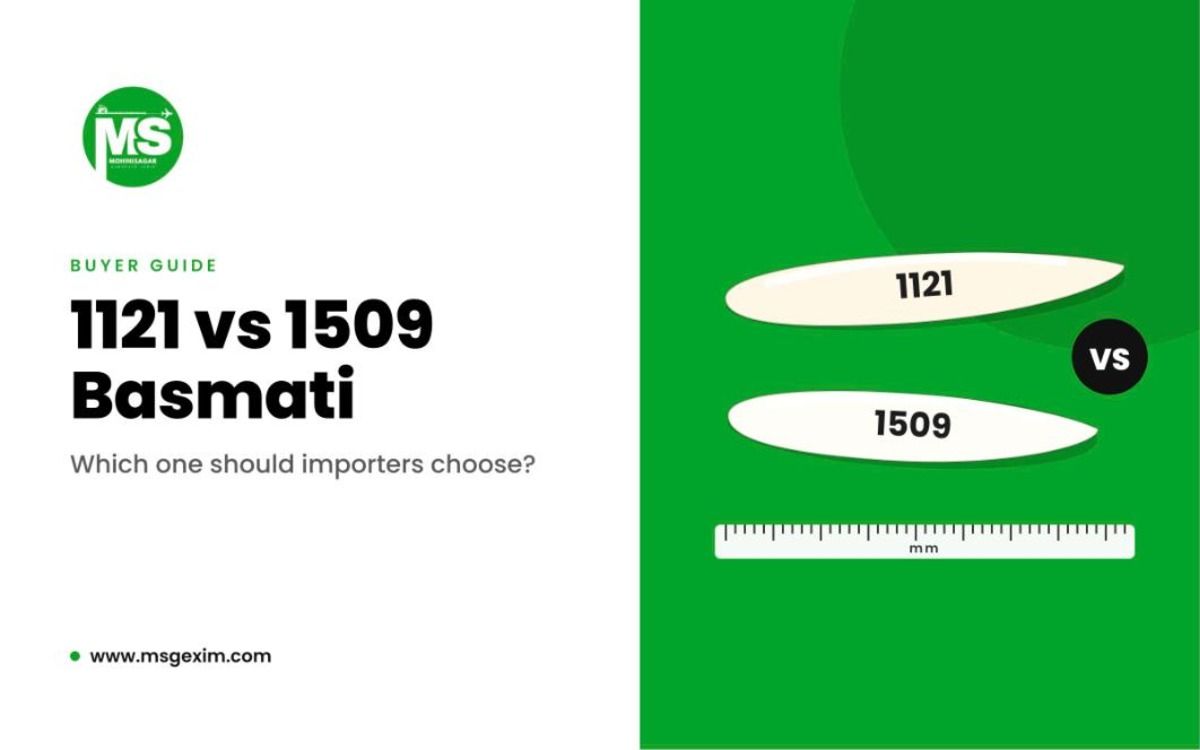
1121 and 1509: India’s Two Workhorse Basmati Varieties
Pusa Basmati 1121 and Pusa Basmati 1509 are both extra-long grain basmati varieties developed by the Indian Agricultural Research Institute (IARI), and together they make up a large share of India’s basmati exports. They look alike in the bag, but they behave differently in the kitchen and on the price sheet. Here is how importers and distributors usually decide between them.
At a Glance
• Grain: both are extra-long and slender.
• Cooked length: 1121 is the benchmark for elongation; 1509 is very good, slightly behind 1121.
• Crop cycle: 1509 matures roughly 3–4 weeks earlier than 1121, so it reaches the market sooner after harvest.
• Price: 1509 is usually priced below 1121.
• Typical use: 1121 for premium retail, biryani and hotels; 1509 for catering, wholesale and value retail.
Cooking Performance
• 1121 is famous for its cooked length: grains grow to more than twice their raw length while staying separate and non-sticky. That is why it is the standard choice for premium biryani, mandi and kabsa, and for menus where the look of the rice matters.
• 1509 also cooks long and fluffy, and in an everyday dish many consumers cannot tell the difference. It elongates a little less and tends to cook slightly faster.
Price and Availability
Because 1509 matures earlier and yields well, it is usually the more economical choice when a customer needs basmati quality at a lower landed cost, such as catering contracts, wholesale markets and value retail packs. Prices of both move with the new-crop arrival (October to December) and with demand from major buying countries, so compare both on the same date. Our current indicative rates are on the Today’s Price page.
Market Preferences (General Trends)
• Saudi Arabia and the GCC: 1121, especially Golden Sella and White Sella, is the established benchmark.
• Price-sensitive Middle East markets: both are traded widely; 1509 is popular where cost matters.
• Europe, UK and North America: 1121 Steam and Raw lead in retail, and buyers often ask for pesticide-residue-compliant lots.
Your own customers’ habits matter more than any general trend, so test both.
What About 1718?
Pusa Basmati 1718 is an improved version of 1121 with built-in resistance to bacterial leaf blight. It keeps the extra-long grain and cooking quality of 1121 and is increasingly offered as a like-for-like alternative. If you buy 1121 today, ask for a 1718 sample to compare.
How to Specify Your Order
Whichever variety you choose, write the key parameters into your contract:
- Average grain length (AGL) of whole grains
2. Broken percentage and moisture limit
3. Purity of the variety and admixture limits
4. Processing form: Raw, Steam, White Sella or Golden Sella
5. Packing: bag type, size and private-label artwork
6. Inspection: pre-shipment inspection agency and certificate of analysis
Get Samples Before You Decide
The surest way to choose is to cook both side by side with your own recipe. Contact us for 1121, 1509 and 1718 samples along with their specifications.
Looking for Bulk Export Quotations?
Contact our trade specialists for container pricing and lab test certificates.
More from the Grain Blog

MohiniSagar Agro Exim connects people globally through premium rice, fostering traditions, flavors, and relationships across cultures. Rice that binds from our land to your table.
© 2026 All Rights Reserved, MohiniSagar Agro Exim India.