5 min read
•
09 Oct 2026
Raw, Steam, White Sella or Golden Sella: Choosing the Right Basmati
The same basmati paddy can become Raw, Steam, White Sella or Golden Sella rice. Learn how each is made, how it cooks and where each one sells best.
MohiniSagar Export Desk
Verified Agricultural & Milling Contributor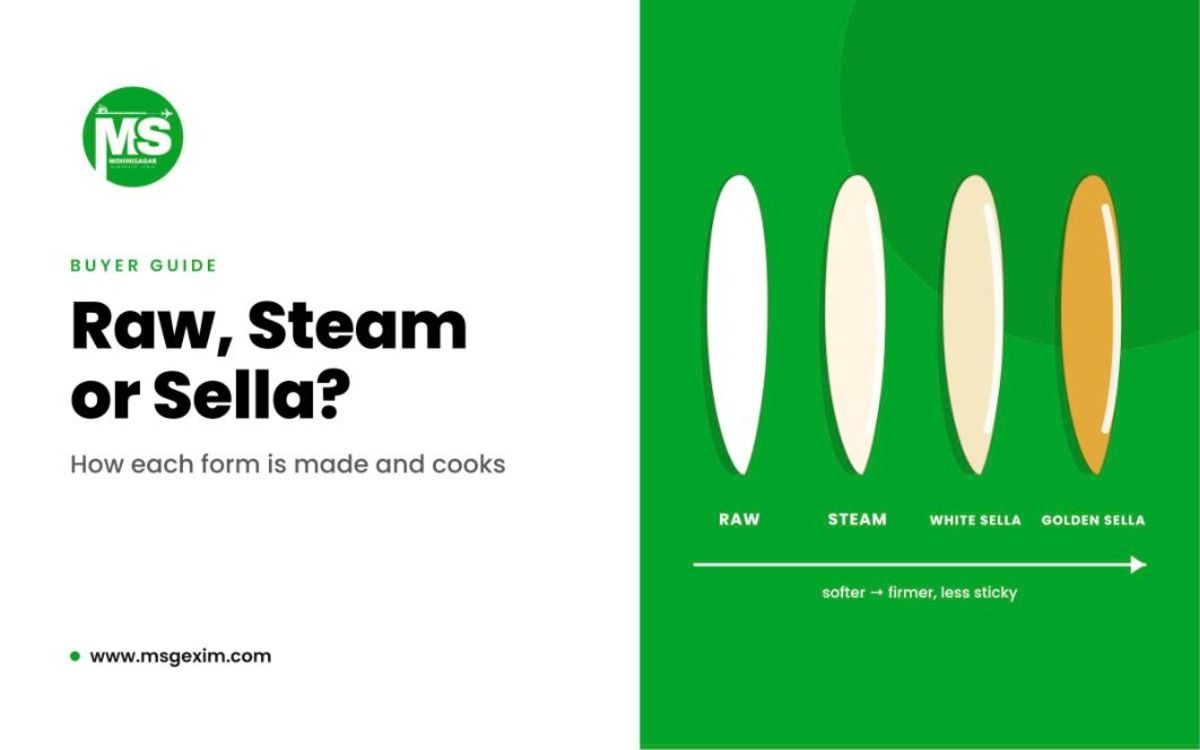
One Paddy, Four Products
Basmati rice reaches buyers in four main processing forms. The variety (1121, 1509, 1718 and so on) decides the grain’s length and aroma; the processing decides its colour, texture, cooking behaviour and storage life. Choosing the right form for your market matters as much as choosing the variety.
1. Raw (White) Rice
• How it’s made: the paddy is cleaned, dehusked and polished, with no water or heat treatment.
• Cooking: the softest texture and the most natural aroma; it needs gentle handling to avoid breaking.
• Best for: home cooking and retail markets that like a soft, fragrant rice.
2. Steam Rice
• How it’s made: the paddy is soaked and lightly steamed before drying and milling. Steaming sets the starch inside the grain without changing its colour much.
• Cooking: firmer and less sticky than raw rice, with fewer broken grains, while keeping a creamy-white look and good aroma.
• Best for: restaurants, hotels and retail in Europe, the UK and the Middle East.
3. White (Creamy) Sella
• How it’s made: “Sella” means parboiled. The paddy is soaked and steamed more intensively than steam rice, then dried and milled, with the process controlled to keep a light creamy colour.
• Cooking: very firm, separate grains that hold their shape even in long cooking. Parboiling also moves some nutrients from the bran into the grain.
• Best for: biryani, mandi and bulk catering, especially in Saudi Arabia and the Gulf.
4. Golden Sella
• How it’s made: a stronger parboiling process that gives the grain an even golden colour.
• Cooking: the most robust form; grains stay separate and non-sticky through heavy cooking and reheating.
• Best for: Gulf markets, food service and large kitchens that cook rice in big batches.
Quick Comparison
• Stickiness: Raw is the softest, followed by Steam, White Sella and Golden Sella.
• Resistance to overcooking: Golden Sella is the most forgiving, then White Sella, Steam and Raw.
• Aroma: usually strongest in Raw and Steam.
• Colour: white (Raw), creamy white (Steam and White Sella), golden (Golden Sella).
Ordering Tips
• Tell your supplier the end use (home cooking, biryani, catering) so they can suggest the right form.
• For Sella, agree the colour standard against a reference sample, because shades vary between mills.
• Ask for a certificate of analysis for each lot covering grain length, broken, moisture and purity.
See the varieties and forms we supply on our Products page, or ask for samples.
Looking for Bulk Export Quotations?
Contact our trade specialists for container pricing and lab test certificates.
More from the Grain Blog

MohiniSagar Agro Exim connects people globally through premium rice, fostering traditions, flavors, and relationships across cultures. Rice that binds from our land to your table.
© 2026 All Rights Reserved, MohiniSagar Agro Exim India.